Tuesday, July 8, 2014


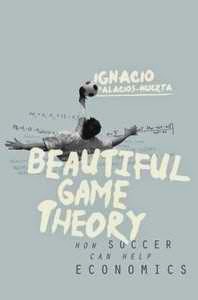
Beautiful Game Theory: How Soccer Can Help Economics
Author: Ignacio Palacios-Huerta

A wealth of research in recent decades has seen the economic approach to human behavior extended over many areas previously considered to belong to sociology, political science, law, and other fields.

Research has also shown that economics can provide insight into many aspects of sports, including soccer. Beautiful Game Theory is the first book that uses soccer to test economic theories and document novel human behavior.

In this brilliant and entertaining book, Ignacio Palacios-Huerta illuminates economics through the world's most popular sport. He offers unique and often startling insights into game theory and microeconomics, covering topics such as mixed strategies, discrimination, incentives, and human preferences. He also looks at finance, experimental economics, behavioral economics, and neuroeconomics. Soccer provides rich data sets and environments that shed light on universal economic principles in interesting and useful ways.

Essential reading for students, researchers, and sports enthusiasts, Beautiful Game Theory is the first book to show what soccer can do for economics.

English | 2014 | 224 pages | PDF | 5,6 MB


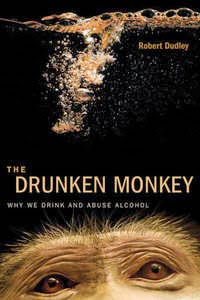
The Drunken Monkey: Why We Drink and Abuse Alcohol
Author: Robert Dudley

Alcoholism, as opposed to the safe consumption of alcohol, remains a major public health issue. In this accessible book, Robert Dudley presents an intriguing evolutionary interpretation to explain the persistence of alcohol-related problems.

Providing a deep-time, interdisciplinary perspective on today’s patterns of alcohol consumption and abuse, Dudley traces the link between the fruit-eating behavior of arboreal primates and the evolution of the sensory skills required to identify ripe and fermented fruits that contain sugar and low levels of alcohol. In addition to introducing this new theory of the relationship of humans to alcohol, the book discusses the supporting research, implications of the hypothesis, and the medical and social impacts of alcoholism.

The Drunken Monkey is designed for interested readers, scholars, and students in comparative and evolutionary biology, biological anthropology, medicine, and public health.

English | 2014 | PDF | 184 pages | 19 MB


The Tax Law of Charitable Giving, 5th Edition
Author: Bruce R. Hopkins

A completely updated guide to the laws and regulations governing charitable givingThis fully updated "Fifth Edition" of "The Tax Law of Charitable Giving" is the definitive resource for nonprofit lawyers, accountants, and fundraising professionals charged with navigating the increasingly complex maze of charitable giving regulations. This new edition includes: Detailed documentation and citations, including references to regulations, rulings, cases, and tax literature. An exhaustive index allowing for quick and easy reference. Annual supplements to keep readers apprised of the latest developments affecting tax-exempt healthcare organizations


English | 2014 | PDF | 928 pages | 4 MB


Plates: Theories and Applications
Authors: K. Bhaskar, T. K. Varadan

Plates: Theories and Applications provides a comprehensive introduction to plate structures, covering classical theory and applications. It considers plate structures in several forms, starting from the simple uniform, thin, homogeneous metallic structure to more efficient and durable alternatives involving features such as variable-thickness, lamination, sandwich construction, fiber reinforcement, functional gradation, and moderately-thick to very-thick geometry. Different theoretical models are then discussed for analysis and design purposes starting from the classical thin plate theory to alternatives obtained by incorporation of appropriate complicating effects or by using fundamentally different assumptions.
Plates: Theories and Applications alsocovers the latest developments on the topic.

English | 2014 | PDF | 352 pages | 3 MB


Transformation of Biomass: Theory to Practice
Author: Andreas Hornung

Biomass is a key resource for meeting the energy and material demands of mankind in the future. As a result, businesses and technologies are developing around biomass processing and its applications.
Transformation of Biomass: Theory to Practice explores the modern applications of biomass and bio-based residues for the generation of energy, heat and chemical products. The first chapter presents readers with a broad overview of biomass and its composition, conversion routes and products. The following chapters deal with specific technologies, including anaerobic digestion, pyrolysis and gasification, as well as hydrothermal and supercritical conversion. Each chapter details current practises, recent developments, business case models and comprehensive analysis of the problems associated with each approach, and how to optimize them.

English | 2014 | PDF | 374 pages | 8,5 MB


Overcoming Learning Disabilities
Author: Tatiana V. Akhutina

Based on the ideas of Russian psychologists Lev Vygotsky and Alexander Luria, this book explores methods of preventing or overcoming learning disabilities. Tatiana V. Akhutina and Natalia M. Pylaeva build on Vygotsky and Luria's sociocultural theory and their principle of a systemic structure and dynamic organization of higher mental functions. They focus on the interactive scaffolding of the weak components of the child's functional systems, the transition from joint child-adult co-actions, and the emotional involvement of the child. The authors discuss effective ways to remediate issues with attention, executive functions (working memory and cognitive control) and spatial and visual-verbal functions. Overcoming Learning Disabilities translates complex problems into easily understandable concepts useful to school psychologists, special and general education teachers, and parents of children with learning disabilities.

English | 2012 | PDF| 316 pages | 7 MB


Automating with SIMATIC S7-400 inside TIA Portal
Author: Hans Berger

This book presents a comprehensive description of the configuration of devices and network for the S7-400 components inside the engineering framework TIA Portal. You learn how to formulate and test a control program with the programming languages LAD, FBD, STL, and SCL. The book is rounded off by configuring the distributed I/O with PROFIBUS DP and PROFINET IO using SIMATIC S7-400 and data exchange via Industrial Ethernet.


SIMATIC is the globally established automation system for implementing industrial controllers for machines, production plants and processes. SIMATIC S7-400 is the most powerful automation system within SIMATIC. This process controller is ideal for data-intensive tasks that are especially typical for the process industry. With superb communication capability and integrated interfaces it is optimized for larger tasks such as the coordination of entire systems.

Open-loop and closed-loop control tasks are formulated with the STEP 7 Professional V11 engineering software in the field-proven programming languages Ladder Diagram (LAD), Function Block Diagram (FBD), Statement List (STL), and Structured Control Language (SCL). The TIA Portal user interface is tuned to intuitive operation and encompasses all the requirements of automation within its range of functions: from configuring the controller, through programming in the different languages, all the way to the program test.

Users of STEP 7 Professional V12 will easily get along with the descriptions based on the V11. With start of V12, the screens of the technology functions might differ slightly from the V11.

English | 2013 | PDF | 746 pages | 28,1 MB

Subscribe to RSS Feed Follow me on Twitter!